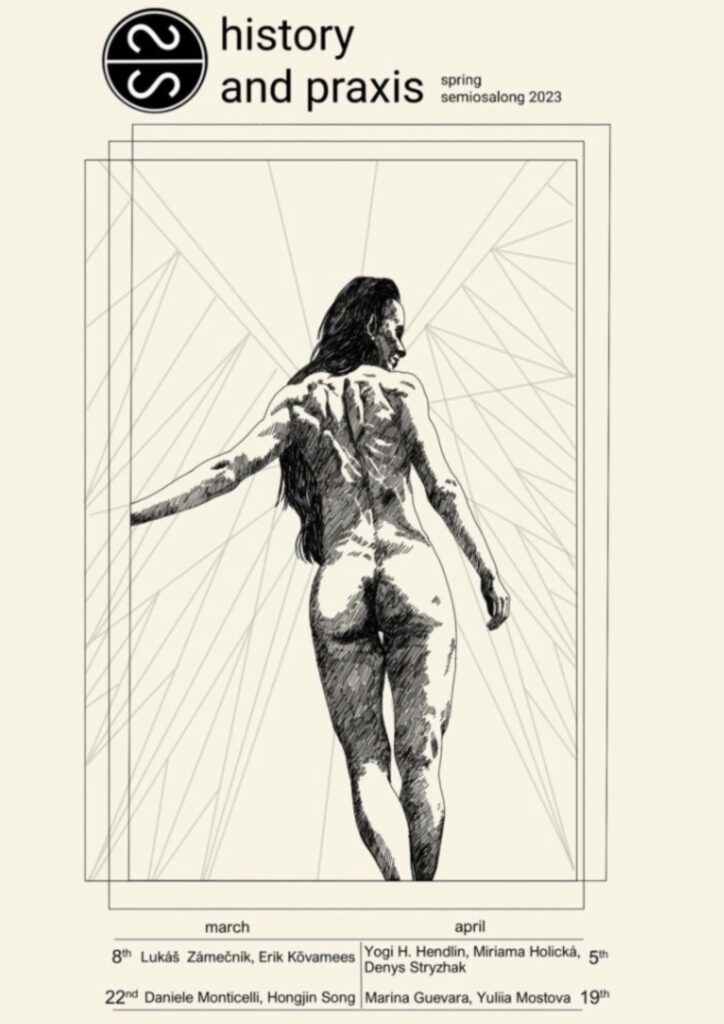
Here is the series theme description for History and Praxis: History remains a central concern of semiotic inquiry for several reasons. It is often posed as a hypothesis that for something to be a sign and for someone to recognize it as such, there needs to be a sedimentation of effectively executed practices: a local ‘history’ of interactions that assure the preservation and transmission of knowledge. Theories of sign processes also often bring ‘history’ as a primordial component of the sign systems behind them; so that, for instance, a natural language is to be defined as a code “plus its history”. Simultaneously, semiotics is also anti-historicist: the synchronic method of Saussure is commonly thought to exclude the temporal, and the Russian Formalists disregarded everything outside the ‘text’ – particularly personal biography and context – in rebellion against the prevailing historical and material determinism of their day. But even they were concerned with the genesis of the phenomena under study, precisely in order to explain how it is that something comes to stand for something else. History entails praxis where signification structures intersect communication acts, and the concatenation of practices weaves the ‘proper’ fabric of history. But whose history? We invite participants this semester to reflect on this personal question and its inevitably political answers.
Semiosalong: History and Praxis