
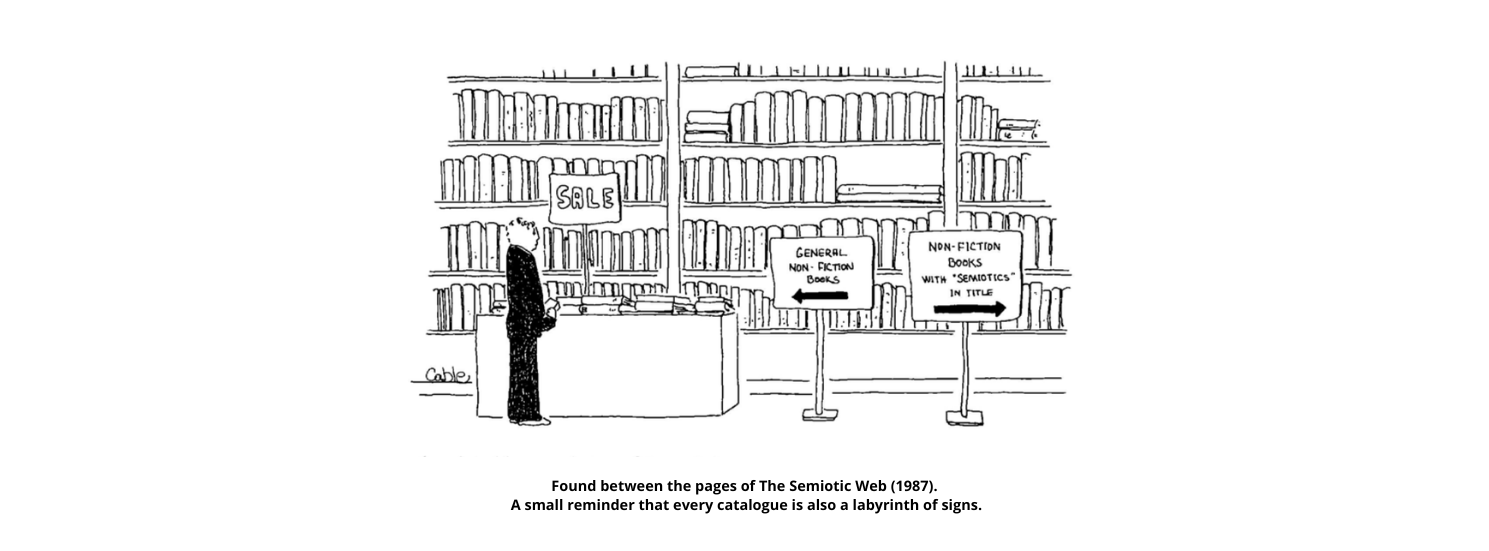
A unified academic catalogue for books, journal articles, book chapters, proceedings papers, conference abstracts and semiotic research materials.
A unified academic catalogue for books, journal articles, proceedings papers, collection articles and semiotic research materials. Search across the full database; results are shown with pagination.
Lietuviški natų leidiniai 1990-2015 m.
View details
Other title information: Bibliografinis sąvadas
Annotation: This publication is a bibliographic compendium of Lithuanian sheet music from 1990 to 2015 compiled in chronological order and presented to readers. The difficult period of restored independence, when sheet music publishing underwent fundamental changes, brought chaos to the field of registration. The ISMN Lithuanian agency began to operate only in 1994, and some publishers even after 1994 did not register their publications with the ISMN agency. As a result, there has been a gap in the registration of publications published aborad, which were registered electronically or in a fragmentary manner. The purpose of this bibliography is to collect and systematise all information about publications of Lithuanian sheet music since 1990, published both in Lithuania and abroad, and to describe them according to international standards. (translated with Google translate)
Identifier: 9786090212349
Status: Available
Lost in translation: Food, identity and otherness
In: Semiotica 2016, Issue 211
- Pages
- 81-104
View details
Identifier: DOI: 10.1515/sem-2016-0100
McLuhan’s war: Cartoons and decapitations
In: Semiotica 2016, Issue 213
- Pages
- 457-472
View details
Identifier: DOI: 10.1515/sem-2015-0132
Meaning-making across disparate realities: A new cognitive model for the personality-integrating response to fairy tales
In: Semiotica 2016, Issue 213
- Pages
- 397-418
View details
Identifier: DOI: 10.1515/sem-2015-0141
Meaning, Narrativity, and the Real
- Edition
- 1 edition
View details
Other title information: The Semiotics of Law in Legal Education IV
Annotation: This book examines the concept of meaning and our general understanding of reality in a legal and philosophical context. Starting from the premise that meaning is a matter of linguistic and other forms of articulation, it considers the inherent philosophical consequences. Part I presents Klages’, Derrida’s, Von Hofmannsthal’s and Wittgenstein’s explorations of silence as a source of articulation and meaning. Debates about 20th century psychologism gave the attitude concept a pivotal role; it illustrates the importance of the discovery that a word is globally qualified as ‘the basic unit of language’. This is mirrored in the fact that we understand reality as a matter of particles and thus interpret the real as a component of an all-embracing ‘particle story’. Each chapter of the book focuses on an aspect of legal semiotics related to the chapter’s theme: for instance on the meaning of a Judge’s ‘Saying for Law’, on law students training in varying attitudes or on the ties between law and language. Part II of the book illustrates our general understanding of reality as a matter of particles and partitioning, and examines texts that prove that particle thinking is basic for our meaning concept. It shows that physics, quantum theory, holism, and modern brain research focusing on human linguistic capabilities, confirm their ties to the particle story. In contrast, the book concludes that partitions and particles are neither a fact in the history of the cosmos nor a determinant of knowledge and the sciences, and that meaning is a process: a constellation rather than a fixation. This is manifest once one understands meaning as the result of continuously changing attitudes, which create our narratives on cosmos and creation. The book proposes a new key for meaning: a linguistic occurrence anchored in dimensions of human narrativity.
Identifier: 9783319281742
Status: Available
Music
- Dependent title
- Musicological studies: monographs
View details
Other title information: Transitions/continuities
Annotation: This collection of papers looks closer to different aspects of musical transitions and continuities from a musicological perspective.
Identifier: 9788688619738
Status: Available
Musica mathematica
View details
Other title information: traditions and innovations in contemporary music
Notes: This book was originally published under the title Musica mathematica. Tradicijos ir inovacijos šiuolaikineje muzikoje by Lithuanian Academy of Music and Theater (Vilnius: Lietuvos muzikos ir teatro akademija, 2013, ISBN 978-609-8071-10-8)
Annotation: The concept of musica mathematica seeks to accurately examine the itnersection of two seemingly radically different subject areas. From the perspective of a European perception, the definition of the science of music was a result of the Pythagorean concept of universal harmony. The Pythagoreans were the first in European culture to raise the issue of uniting music and mathematics, sound and number. In the three parts of the monograph, versatile cases of the itnersection of music and mathematics are displayed, moving from philosophical and aesthetic considerations about mathesis to practical studies, discussing the interaction between music and other kinds of art (architecture, painting, poetry and literature) and providing a practical research of contemporary music compositions.
Identifier: 9783631713815
Status: Available
Myths, traditions, and rituals of food in Spanish cinema
In: Semiotica 2016, Issue 211
- Pages
- 293-313
View details
Identifier: DOI: 10.1515/sem-2016-0104
Nature and culture in visual communication: Japanese variations on<i>Ludus Naturae</i>
In: Semiotica 2016, Issue 213
- Pages
- 213-245
View details
Identifier: DOI: 10.1515/sem-2015-0145
Non-anthropogenic mind and complexes of cultural codes
In: Semiotica 2016, Issue 213
- Pages
- 63-73
View details
Identifier: DOI: 10.1515/sem-2015-0034
Once upon two cities
View details
Other title information: A parallel between New York City and Bucharest by 1900
Annotation: This book is an excursion into the past. It deals with two cities: New York and Bucharest in the era between 1865 and 1914. The two cities are representative of the two countries they belong to, but they are also important in themselves, qua cities. This is the era when both cities were being built and began to assert their identities, when they were becoming aware of their assets and starting to talk about them
Identifier: 2016021813
Status: Available
Reading palm-up signs: Neurosemiotic overview of a common hand gesture
In: Semiotica 2016, Issue 210
- Pages
- 235-250
View details
Identifier: DOI: 10.1515/sem-2016-0053
Reflections on Cybersemiotic Experience in the Meta-Environment
In: Cybernetics & Human Knowing 2016, Volume 23, Issue 4: Cybersemiotics and Technology-Based Arts
View details
Rethinking semiotics: Toward a theory of intentional sign
In: Semiotica 2016, Issue 210
- Pages
- 167-189
View details
Identifier: DOI: 10.1515/sem-2016-0065
Rethinking the Peircean trichotomy of icon, index, and symbol
In: Semiotica 2016, Issue 213
- Pages
- 165-175
View details
Identifier: DOI: 10.1515/sem-2015-0134
Review of Speaking hatefully: Culture, communication, and political action in Hungary
In: Semiotica 2016, Issue 210
- Pages
- 259-265
View details
Identifier: DOI: 10.1515/sem-2015-0087
Revisiting dynamic space in film from a semiotic perspective
In: Semiotica 2016, Issue 210
- Pages
- 129-149
View details
Identifier: DOI: 10.1515/sem-2016-0050
Reviving the American Society for Cybernetics
In: Cybernetics & Human Knowing 2016, Volume 23, Issue 1: 50th Anniversary Retrospective of the ASC
- Pages
- 19
View details
Semiosis of intercultural cooking: The nineteenth century travel literature as a case study
In: Semiotica 2016, Issue 211
- Pages
- 45-57
View details
Identifier: DOI: 10.1515/sem-2016-0091
Semiotic food, semiotic cooking: The ritual of preparation and consumption of hallacas in Venezuela
In: Semiotica 2016, Issue 211
- Pages
- 271-291
View details
Identifier: DOI: 10.1515/sem-2016-0088
Semiotics and education, semioethic perspectives
In: Semiotica 2016, Issue 213
- Pages
- 247-279
View details
Identifier: DOI: 10.1515/sem-2016-0078
Semiotics of precision and imprecision
In: Semiotica 2016, Issue 213
- Pages
- 539-555
View details
Identifier: DOI: 10.1515/sem-2015-0077
Size and shape depictions in the manual modality: A taxonomy of iconic devices in Adamorobe Sign Language
In: Semiotica 2016, Issue 210
View details
Identifier: DOI: 10.1515/sem-2016-0049
Starred cosmopolitanism: Celebrity chefs, documentaries, and the circulation of global desire
In: Semiotica 2016, Issue 211
- Pages
- 315-339
View details
Identifier: DOI: 10.1515/sem-2016-0098
Synchronicity as Time: E-Series Time for Living Formations
In: Cybernetics & Human Knowing 2016, Volume 23, Issue 3: Batesonian Facets
View details
Taste and meaning
In: Semiotica 2016, Issue 211
View details
Identifier: DOI: 10.1515/sem-2016-0106
The culinary and social-semiotic meaning of food: Spicy meals and their significance in Mexico, Italy, and Texas
In: Semiotica 2016, Issue 211
- Pages
- 247-269
View details
Identifier: DOI: 10.1515/sem-2016-0108
The Dark Side of Technological Singularity: New Barbarism
In: Cybernetics & Human Knowing 2016, Volume 23, Issue 4: Cybersemiotics and Technology-Based Arts
View details
The free slave paradox
In: Semiotica 2016, Issue 210
- Pages
- 57-74
View details
Identifier: DOI: 10.1515/sem-2016-0054
The Mutual Benefits of Cybersemiotics and the Field of Technology-Based Arts
In: Cybernetics & Human Knowing 2016, Volume 23, Issue 4: Cybersemiotics and Technology-Based Arts
View details
The Path to Steps to an Ecology of Mind
In: Cybernetics & Human Knowing 2016, Volume 23, Issue 3: Batesonian Facets
View details
The problem of the modern and tradition
View details
Other title information: early Soviet musical culture and the musicological theory of Boris Asafiev (1884–1949)
Annotation: This is the first English language analytical and critical monograph to examine Asafiev's literary output during 1916-1930. The author explores Asafiev's critical and musicological works both against the backfrop of Russian cultural history, an within the Western Europen intellectual historical context. She demonstrates how Asafiev became an established Soviet cultural theorietician of music, a celebrated but also a persecuted Soviet musicologist.
Identifier: 9789526825779
Status: Available
The rhetoric of love and self-narrativesin the cinema image: A Peircean approach
In: Semiotica 2016, Issue 213
- Pages
- 197-211
View details
Identifier: DOI: 10.1515/sem-2016-0033
The rise and fall of metaphor: A study in meaning and meaninglessness
In: Semiotica 2016, Issue 213
- Pages
- 419-433
View details
Identifier: DOI: 10.1515/sem-2015-0131
The semiotics of migrants’ food: Between codes and experience
In: Semiotica 2016, Issue 211
- Pages
- 59-80
View details
Identifier: DOI: 10.1515/sem-2016-0089
The structural properties of the anagram in poetry
In: Semiotica 2016, Issue 213
- Pages
- 123-164
View details
Identifier: DOI: 10.1515/sem-2016-0158
The thematic structure of homepages: An exploratory systemic-functional account
In: Semiotica 2016, Issue 210
- Pages
- 105-127
View details
Identifier: DOI: 10.1515/sem-2016-0048
The translation of food in literature: A culinary journey through time and genres
In: Semiotica 2016, Issue 211
- Pages
- 27-43
View details
Identifier: DOI: 10.1515/sem-2016-0102
The Umberto Eco gaze
In: Semiotica 2016, Issue 211
- Pages
- 1-4
View details
Identifier: DOI: 10.1515/sem-2016-0092
Toward a Recursive Theory of Everyday Double Binds
In: Cybernetics & Human Knowing 2016, Volume 23, Issue 3: Batesonian Facets
View details
Toward an embodied account of double-voiced discourse: The critical role of imagery and affect in Bakhtin’s dialogic imagination
In: Semiotica 2016, Issue 213
- Pages
- 177-196
View details
Identifier: DOI: 10.1515/sem-2016-0159
Towards a teleo-semiotic theory of individuation
In: Semiotica 2016, Issue 213
- Pages
- 281-305
View details
Identifier: DOI: 10.1515/sem-2015-0103
Transparent Dialogues: On Complex Affective Systems (CAFFS)
In: Cybernetics & Human Knowing 2016, Volume 23, Issue 4: Cybersemiotics and Technology-Based Arts
View details
Two approaches to defining internal, external, and zero-focalization
In: Semiotica 2016, Issue 210
- Pages
- 191-207
View details
Identifier: DOI: 10.1515/sem-2016-0056
Virtual Logic—George Spencer-Brown (2 April 1923 – 25 August 2016)
In: Cybernetics & Human Knowing 2016, Volume 23, Issue 3: Batesonian Facets
View details
Vistas for organized global semiotics
In: Semiotica 2016, Issue 211
- Pages
- 9-18
View details
Identifier: DOI: 10.1515/sem-2016-0093
Vygotsky, Bakhtin, Lotman: Towards a theory of communication in the horizon of<i>the other</i>
In: Semiotica 2016, Issue 213
- Pages
- 75-90
View details
Identifier: DOI: 10.1515/sem-2015-0031
Zero sign duality in visual semiotics
In: Semiotica 2016, Issue 210
- Pages
- 209-214
View details
Identifier: DOI: 10.1515/sem-2016-0051
Describing the past: Tartu-Moscow School ideas on history, historiography, and the historian's craft
In: Sign Systems Studies 2015, Volume 43, Issue 2/3
- Pages
- 269-280
View details
Identifier: 10.12697/SSS.2015.43.2-3.08
Heroizability
View details
Other title information: An anthroposemiotic theory of Literary characters
Annotation: It is commonly believed that some approaches of structural semiotics, narratology and cognitive science have not yet succeeded in constructing a complete and coherent theory of literary character. The author argues that the primary explanation of the failure is the artificial separation between characters and their actions. One of the chief implications of such separation is treating characters in terms of structures, agents, actants, functions, roles, and signs, which obviously mean that actions can hardly be explained as intended, motivated, performed and experienced. Survival, as a motivation-based concept, is one of the key concepts making the separation between character and action something impossible. Humans in literary narratives search for survival as an aware process of knowing and meaning making. Meaning in literary narratives can be produced by heroizability, which treats literary characters as living anthroposemiotic entities aware of their natural motivation to achieve in order to survive and produce meanings of their survival. As such, characters in literary narratives have active cognitions, and their cognitive activities remain meaningless without a process of semiosis. Applying Anthroposemiotic theory with Modeling System Theory, heroizability provides methodical tools to explain how the narrative text is represented and, thus, how it is to be interpreted properly by the reader not only to find, but also to make meaning in narrative world.
Identifier: 9781501510816
Status: Available