
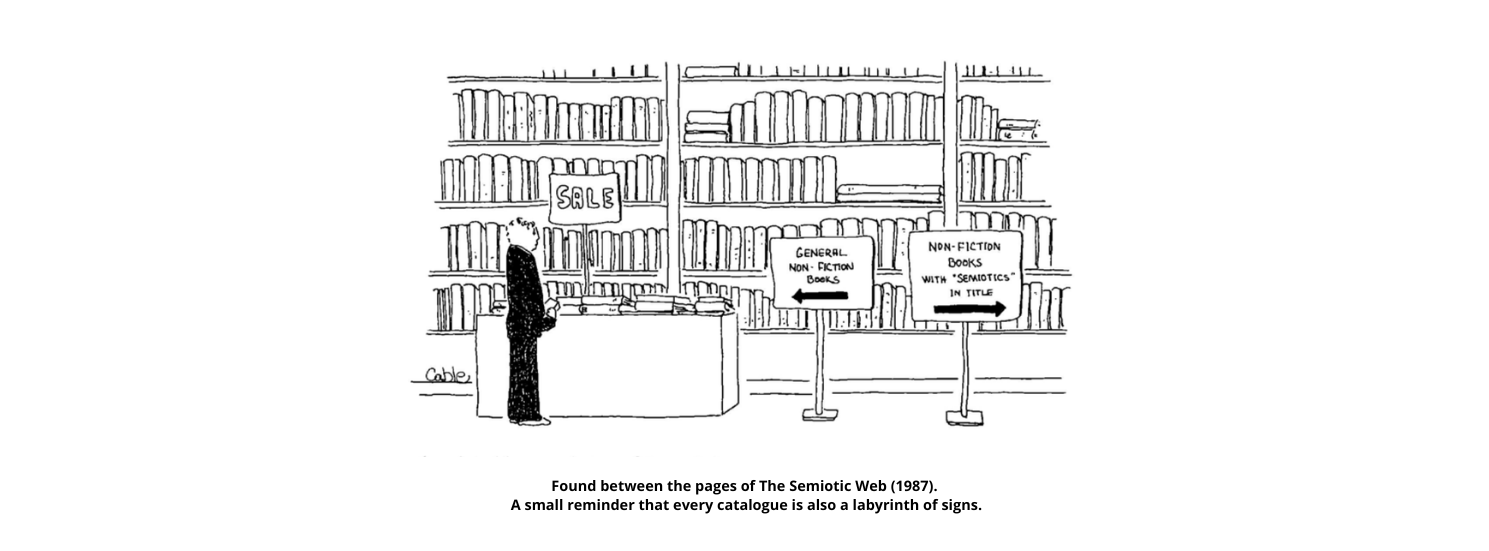
A unified academic catalogue for books, journal articles, book chapters, proceedings papers, conference abstracts and semiotic research materials.
A unified academic catalogue for books, journal articles, proceedings papers, collection articles and semiotic research materials. Search across the full database; results are shown with pagination.
Thesaurus
Browse authorized terms and raw keywords indexed across books, journals, articles, collections and proceedings. Authorized terms search variants and related concepts.
Once upon two cities
Mariana Net
Space Common Ground Publishing 2016021813 Available
View details
Other title information: A parallel between New York City and Bucharest by 1900
Annotation: This book is an excursion into the past. It deals with two cities: New York and Bucharest in the era between 1865 and 1914. The two cities are representative of the two countries they belong to, but they are also important in themselves, qua cities. This is the era when both cities were being built and began to assert their identities, when they were becoming aware of their assets and starting to talk about them
Identifier: 2016021813
Status: Available
The Parallax View
Slavoj Žižek
Philosophy MIT press 9780262240512 Available
View details
Annotation: The Parallax View is Slavoj Žižek's most substantial theoretical work to appear in many years; Žižek himself describes it as his magnum opus. Parallax can be defined as the apparent displacement of an object, caused by a change in observational position. Žižek is interested in the "parallax gap" separating two points between which no synthesis or mediation is possible, linked by an "impossible short circuit" of levels that can never meet. From this consideration of parallax, Žižek begins a rehabilitation of dialectical materialism. Modes of parallax can be seen in different domains of today's theory, from the wave-particle duality in quantum physics to the parallax of the unconscious in Freudian psychoanalysis between interpretations of the formation of the unconscious and theories of drives. In The Parallax View, Žižek, with his usual astonishing erudition, focuses on three main modes of parallax: the ontological difference, the ultimate parallax that conditions our very access to reality; the scientific parallax, the irreducible gap between the phenomenal experience of reality and its scientific explanation, which reaches its apogee in today's brain sciences (according to which "nobody is home" in the skull, just stacks of brain meat—a condition Žižek calls "the unbearable lightness of being no one"); and the political parallax, the social antagonism that allows for no common ground. Between his discussions of these three modes, Žižek offers interludes that deal with more specific topics—including an ethical act in a novel by Henry James and anti-anti-Semitism. The Parallax View not only expands Žižek's Lacanian-Hegelian approach to new domains (notably cognitive brain sciences) but also provides the systematic exposition of the conceptual framework that underlies his entire work. Philosophical and theological analysis, detailed readings of literature, cinema, and music coexist with lively anecdotes and obscene jokes.
Identifier: 9780262240512
Status: Available
Is there a Semiocentric Predicament?
JOSEPH L. ESPOSITO
In: Semiotica 1977, Issue 2024-03-04 00:00:00
Semiotica DOI: 10.1515/semi.1977.19.3-4.259
View details
Identifier: DOI: 10.1515/semi.1977.19.3-4.259
Jan Mukařovský and Charles W. Morris: Two Pioneers of the Semiotics of Art
PETER STEINER
In: Semiotica 1977, Issue 2024-03-04 00:00:00
Semiotica DOI: 10.1515/semi.1977.19.3-4.321
View details
Identifier: DOI: 10.1515/semi.1977.19.3-4.321
Mukařovský, Structuralism, and the Essay
SARAH SIMMONS
In: Semiotica 1977, Issue 2024-03-04 00:00:00
Semiotica DOI: 10.1515/semi.1977.19.3-4.335
View details
Identifier: DOI: 10.1515/semi.1977.19.3-4.335
Peirce and Piaget: A Commentary on Signs of a Common Ground
MICHAEL D. SMITH
In: Semiotica 1977, Issue 2024-03-04 00:00:00
Semiotica DOI: 10.1515/semi.1977.19.3-4.271
View details
Identifier: DOI: 10.1515/semi.1977.19.3-4.271
Peirce's Categories: Structure of Semiotic
GAYLE L. ORMISTON
In: Semiotica 1977, Issue 2024-03-04 00:00:00
Semiotica DOI: 10.1515/semi.1977.19.3-4.209
View details
Identifier: DOI: 10.1515/semi.1977.19.3-4.209
Peirce’s Notion of the Symbol
RULON S. WELLS
In: Semiotica 1977, Issue 2024-03-04 00:00:00
Semiotica DOI: 10.1515/semi.1977.19.3-4.197
View details
Identifier: DOI: 10.1515/semi.1977.19.3-4.197
Questions Concerning Certain Classifications Claimed for Signs
DAVID SAVAN
In: Semiotica 1977, Issue 2024-03-04 00:00:00
Semiotica DOI: 10.1515/semi.1977.19.3-4.179
View details
Identifier: DOI: 10.1515/semi.1977.19.3-4.179
Reality as Language in the Peircean Semiotic
MATTHEW J. FAIRBANKS
In: Semiotica 1977, Issue 2024-03-04 00:00:00
Semiotica DOI: 10.1515/semi.1977.19.3-4.233
View details
Identifier: DOI: 10.1515/semi.1977.19.3-4.233
Reversals and Recognitions: Peirce and Mukařovský on the Art of Conversation
ROBERTA KEVELSON
In: Semiotica 1977, Issue 2024-03-04 00:00:00
Semiotica DOI: 10.1515/semi.1977.19.3-4.281
View details
Identifier: DOI: 10.1515/semi.1977.19.3-4.281
Semiotics and Philosophy at the International Peirce Congress
JOSEPH L. ESPOSITO
In: Semiotica 1977, Issue 2024-03-04 00:00:00
Semiotica DOI: 10.1515/semi.1977.19.3-4.355
View details
Identifier: DOI: 10.1515/semi.1977.19.3-4.355
Some Leading Ideas of Peirce’s Semiotic
JOSEPH RANSDELL
In: Semiotica 1977, Issue 2024-03-04 00:00:00
Semiotica DOI: 10.1515/semi.1977.19.3-4.157
View details
Identifier: DOI: 10.1515/semi.1977.19.3-4.157
The Esthetic Sign in Peirce's Semiotic
JAY ZEMAN
In: Semiotica 1977, Issue 2024-03-04 00:00:00
Semiotica DOI: 10.1515/semi.1977.19.3-4.241
View details
Identifier: DOI: 10.1515/semi.1977.19.3-4.241
The Semiotics of Art: A Dynamic View
HERBERT EAGLE
In: Semiotica 1977, Issue 2024-03-04 00:00:00
Semiotica DOI: 10.1515/semi.1977.19.3-4.367
View details
Identifier: DOI: 10.1515/semi.1977.19.3-4.367
Towards a Prague School Theory of Semantics
LAWRENCE W. NEWMAN
In: Semiotica 1977, Issue 2024-03-04 00:00:00
Semiotica DOI: 10.1515/semi.1977.19.3-4.341
View details
Identifier: DOI: 10.1515/semi.1977.19.3-4.341